


高效有機錫T-9辛酸亞錫溶液在自結(jié)皮泡沫制品中的脫模速度優(yōu)化與應(yīng)用案例
Self-skinning foam products and high-efficiency organotin T-9 stannous octoate solution
Self-skinning foam is a high-performance material widely used in automotive interiors, furniture manufacturing and construction. The material is known for its excellent mechanical properties and surface finish, and its unique “self-skinning” properties allow the finished product to achieve a smooth, durable finish without the need for additional coatings. However, the production process of self-skinning foam places extremely high requirements on the selection of catalysts. The catalyst not only needs to ensure the smooth progress of the foaming reaction, but also must show excellent performance during the demoulding stage to achieve fast and efficient production.
It is against this background that the high-efficiency organotin T-9 stannous octoate solution was introduced into the production process of self-skinning foam. As an organotin catalyst, T-9 has extremely high catalytic activity and thermal stability, and can significantly accelerate the chemical reaction rate in polyurethane systems. At the same time, its molecular structure gives it good solubility and dispersion, allowing it to be evenly distributed in complex multi-component systems, thereby avoiding the problem of local overcatalysis or uneven reaction. In addition, T-9 exhibits excellent volatility control under high temperature conditions, making it ideal for optimizing release speed of self-skinning foams.
This article aims to explore the application potential of high-efficiency organotin T-9 stannous octoate solution in self-skinning foam products, especially how to optimize the demoulding speed by adjusting process parameters. We will start from the basic principles and combine it with actual case analysis to deeply analyze the advantages of T-9 in improving production efficiency and product quality, and provide practical reference for researchers and engineers in related fields.
Basic characteristics and mechanism of action of high-efficiency organotin T-9 stannous octoate solution
Highly efficient organotin T-9 stannous octoate solution is a catalyst based on organotin compounds, and its core component is stannous octoate (Sn(Oct)?). This compound is composed of two octanoate ions coordinated with a divalent tin ion, and its molecular structure gives it a series of unique chemical and physical properties. First of all, stannous octoate has high thermal and chemical stability and can maintain catalytic activity even under high temperature conditions, which makes it particularly suitable for self-skinning foam production environments that require high-temperature processing. Secondly, due to the long carbon chain structure of octanoate ions, T-9 solution exhibits good solubility and dispersion, and can be evenly distributed in the mixed system of polyol and isocyanate, thus effectively avoiding side reactions caused by excessive local concentration of catalyst.
From the perspective of catalytic mechanism, T-9 mainly accelerates the formation of polyurethane by promoting the reaction between isocyanate group (-NCO) and hydroxyl group (-OH). Specifically, stannous octoate, as a Lewis acid, can weakly coordinate with the -NCO group, thereby reducing the reaction activation energy and accelerating the reaction rate. In addition, T-9 can also regulate the reaction path, reduce the generation of by-products, and improve the purity and quality of the final product. For example, in the production process of self-skinning foam, T-9 can not only promote the rapid solidification of the foam body, but also form a dense crust layer on the surface, enhancing the mechanical strength and appearance of the finished product.
In practical applications, these characteristics of T-9 make it a key factor in optimizing the demoulding speed of self-skinning foam. On the one hand, its efficient catalytic performance can shorten the reaction time, thereby speeding up the mold turnover rate; on the other hand, its ability to precisely control the reaction path helps form a more uniform foam structure and reduce demoulding difficulties caused by uneven internal stress. These advantages jointly establish T-9’s important position in the production of self-skinning foam, and also provide a solid foundation for subsequent process optimization.
Optimization of demoulding speed: key parameters and their effects
In the production process of self-skinning foam, the optimization of demoulding speed is directly related to production efficiency and product quality. High-efficiency organotin T-9 stannous octoate solution plays a vital role in this link due to its excellent catalytic performance. However, to realize its full potential, several key parameters must be considered, including temperature, pressure, catalyst concentration and reaction time. The interaction between these parameters determines the speed of demoulding and the performance of the final product.
First of all, temperature is one of the core factors that affects the demoulding speed. In the production of self-skinning foam, an increase in temperature will significantly accelerate the rate of chemical reaction between isocyanate and polyol, thus shortening the curing time. However, too high a temperature can cause the reaction to go out of control, causing defects in the foam structure, such as bubble collapse or surface roughness. Therefore, setting the reaction temperature reasonably is the key to balancing demoulding speed and product quality. Typically, when using T-9 catalyst, the recommended reaction temperature range is 50°C to 80°C. Within this range, T-9 can maintain stable catalytic activity while avoiding side reactions caused by excessive temperature.
Secondly, the impact of pressure on demoulding speed cannot be ignored. During the foaming process, changes in pressure will affect the solubility and diffusion rate of gas in the polymer matrix, thereby indirectly affecting the density and structural uniformity of the foam. Lower pressure helps gas escape quickly and accelerates the expansion and solidification of the foam, but too low pressure may cause voids or collapse inside the foam. Therefore, in actual operation, the pressure is usually controlled between 0.1 MPa and 0.3 MPa to ensure the integrity of the foam structure and smooth demoulding.
Catalyst concentration is another important parameter that determines the demoulding speed. T-9 has extremely high catalytic activity, but its dosage needs to be precisely controlled according to specific formulas and process conditions. Too high a catalyst concentration may cause the reaction to be too fast, causing excessive heat to be generated inside the foam, leading to localized scorching or cracking. On the contrary, if the catalyst concentration is too low, the curing time will be prolonged and the production efficiency will be reduced. Generally speaking, the recommended dosage of T-9 is 0.1% to 0.5% of the total reaction system mass. Within this range, sufficient catalytic activity can be ensured and side reactions can be avoided.
, the length of reaction time also has a significant impact on the demoulding speed. In theory, a shorter reaction time can increase the turnover rate of molds, thereby improving production efficiency. However, if the reaction time is insufficient, the foam may not fully cure, resulting in breakage or deformation during demolding. Therefore, a reasonable reaction time should be determined comprehensively based on factors such as temperature, pressure, and catalyst concentration. In the case of using T-9 catalyst, it is usually recommended to control the reaction time between 2 minutes and 5 minutes to ensure that the foam reaches the ideal degree of curing before demoulding.
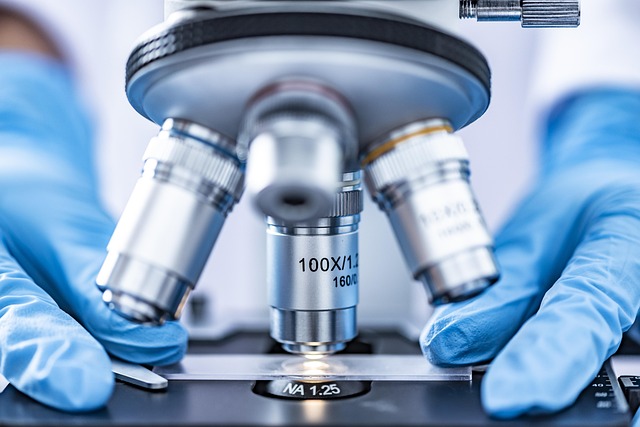
In summary, temperature, pressure, catalyst concentration and reaction time are key parameters for optimizing the demoulding speed of self-skinning foam. There are complex interactions between these parameters, and adjustments to any single parameter may have a knock-on effect on the overall process. Therefore, in actual production, the best parameter combination must be found through experiments and data analysis to achieve dual optimization of demoulding speed and product quality.
Practical application case: Optimization of demoulding speed of high-efficiency organotin T-9 stannous octoate solution
In order to verify the actual effect of high-efficiency organotin T-9 stannous octoate solution in the production of self-skinning foam, we selected a company specializing in the manufacturing of automotive interior parts as the research object. The company mainly produces steering wheel covering materials for high-end models. Such products have extremely strict requirements on surface finish and mechanical strength. In the traditional process, due to insufficient catalyst performance and slow demoulding speed, the mold turnover rate is low, which seriously affects production efficiency. In order to solve this problem, the company decided to introduce T-9 solution and systematically optimize its process parameters.
Process parameters and problem analysis before optimization
Before optimization, the company’s production process used conventional organotin catalysts, with the reaction temperature set to 60°C, the pressure 0.2 MPa, the catalyst concentration 0.3%, and the reaction time 4 minutes. Although this parameter combination can meet basic product quality requirements, there are still the following problems in actual operation:
- Slow demoulding speed: Due to insufficient catalyst activity, the foam curing time is long, resulting in a mold turnover rate of only 8 per hour.
- Surface quality issues: Some products have slight tears or uneven surfaces during demoulding, which increases the rate of defective products.
- High energy consumption: In order to make up for the lack of catalyst activity, companies have to increase the reaction temperature, thus increasing energy consumption.
Parameter optimization and experimental design
To solve the above problems, weThe process parameters have been comprehensively optimized, and the impact of different parameter combinations on demoulding speed and product quality has been verified through multiple experiments. The following are the optimized key parameter settings and their experimental results:
| Parameters | Before optimization | After optimization | Remarks |
|---|---|---|---|
| Reaction temperature (°C) | 60 | 70 | Increase temperature to speed up curing |
| Pressure (MPa) | 0.2 | 0.25 | Increase pressure to improve foam structure |
| Catalyst concentration (%) | 0.3 | 0.2 | Reduce dosage to avoid overreaction |
| Reaction time (min) | 4 | 3 | Shorten time to improve productivity |
During the optimization process, we found that increasing the temperature significantly accelerated the reaction rate, while appropriately increasing the pressure helped to improve the uniformity of the foam. At the same time, by reducing the catalyst concentration, local burning caused by too fast reaction is avoided. Finally, the reaction time was shortened from 4 minutes to 3 minutes, further improving the mold turnover rate.
Effectiveness evaluation after optimization
After parameter optimization, the company’s production efficiency and product quality have been significantly improved, specifically in the following aspects:
- Improved demoulding speed: The mold turnover rate increased from 8 pieces per hour to 12 pieces per hour, and the production efficiency increased by 50%.
- Surface quality improvement: The product surface is smoother, tears and unevenness are basically eliminated, and the defective rate is reduced from 5% to less than 1%.
- Reduced energy consumption: Although the reaction temperature has increased, the overall energy consumption has dropped by 10% due to the improvement in catalyst efficiency.
- Significant economic benefits: The improvement of production efficiency and the reduction of defective products directly bring about cost savings, which is expected to save the company about 200,000 yuan every year.
Data support and conclusion
Through the comparative analysis of data before and after optimization, we can clearly see that efficient and effectiveOrganotin T-9 stannous octoate solution has great potential in the production of self-skinning foam. Its excellent catalytic performance can not only significantly increase the demoulding speed, but also reduce energy consumption while ensuring product quality. This case fully proves the feasibility and superiority of T-9 solution in practical applications and provides valuable reference experience for similar companies.
Summary and outlook: Application prospects of high-efficiency organotin T-9 stannous octoate solution
It can be seen from the above analysis that the application of high-efficiency organotin T-9 stannous octoate solution in self-skinning foam products has significant advantages. Its efficient catalytic performance and precise control of the reaction path not only greatly increase the demoulding speed, but also optimize the structural uniformity and surface quality of the foam. These characteristics allow T-9 to show great potential in industrial production, especially in areas with high requirements for production efficiency and product quality, such as automotive interiors, high-end furniture manufacturing, and precision instrument packaging.
In the future, with the continuous advancement of chemical technology, the research and development direction of efficient organotin catalysts may further focus on improving environmental protection and multifunctionality. For example, new organotin compounds with low volatility or non-toxicity are developed to meet increasingly stringent environmental regulations. At the same time, customized catalysts for specific application scenarios will also become a research hotspot, such as special catalysts suitable for extreme temperature conditions or complex geometric molds. These innovations will further expand the application scope of T-9 and its derivatives, bringing more possibilities to the self-skinning foam industry.
For researchers and engineers in related fields, it is crucial to have a deep understanding of the mechanism of action and optimization strategies of efficient organotin catalysts. Only through scientific experimental design and rigorous data analysis can the best matching of process parameters be achieved in actual production, thereby fully utilizing the potential of T-9. It is hoped that the research results of this article can provide valuable reference for colleagues in the industry and promote the sustainable development of self-skinning foam technology.
====================Contact information=====================
Contact: Manager Wu
Mobile phone number: 18301903156 (same number as WeChat)
Contact number: 021-51691811
Company address: No. 258, Songxing West Road, Baoshan District, Shanghai
============================================================
Polyurethane waterproof coating catalyst catalog
-
NT CAT 680 gel catalyst is an environmentally friendly metal composite catalyst that does not contain polybrominated bicarbonates, polybrominated diethers, lead, mercury, cadmium, octyl tin, butyl tin, base tin and other nine categories restricted by RoHS.Organotin compound, suitable for polyurethane leather, coatings, adhesives, silicone rubber, etc.
-
NT CAT C-14 is widely used in polyurethane foams, elastomers, adhesives, sealants and room temperature curing silicone systems;
-
NT CAT C-15 is suitable for aromatic isocyanate two-component polyurethane adhesive systems, with medium catalytic activity and lower activity than A-14;
-
NT CAT C-16 is suitable for aromatic isocyanate two-component polyurethane adhesive systems. It has a delay effect and certain hydrolysis resistance, and the combination has a long storage time;
-
NT CAT C-128 is suitable for polyurethane two-component rapid curing adhesive systems. It has strong catalytic activity among this series of catalysts and is especially suitable for aliphatic isocyanate systems;
-
NT CAT C-129 is suitable for aromatic isocyanate two-component polyurethane adhesive system. It has a strong delay effect and strong stability with water;
-
NT CAT C-138 is suitable for aromatic isocyanate two-component polyurethane adhesive system, with medium catalytic activity, good fluidity and hydrolysis resistance;
-
NT CAT C-154 is suitable for aliphatic isocyanate two-component polyurethane adhesive systems and has a delay effect;
-
NT CAT C-159 is suitable for aromatic isocyanate two-component polyurethane adhesive system and can be used to replace A-14. The addition amount is 50-60% of A-14;
-
NT CAT MB20 gel catalyst can be used to replace tin metal catalysts in soft block foams, high-density flexible foams, spray foams, microporous foams and rigid foam systems. Its activity is relatively lower than organotin;
-
NT CAT T-12 dibutyltin dilaurate, gel catalyst, suitable for polyether type high-density structural foam, also used in polyurethane coatings, elastomers, adhesives, room temperature curing silicone rubber, etc.;
-
NT CAT T-125 is an organotin-based strong gel catalyst. Compared with other dibutyltin catalysts, the T-125 catalyst has higher catalytic activity and selectivity for urethane reactions, and has improved hydrolysis stability. It is suitable for rigid polyurethane spray foam, molded foam and CASE applications.