


有機錫T-9存儲注意事項及在夏季高溫環(huán)境下如何保持催化活性的技術性建議
Basic properties and application areas of organotin T-9
Organotin compounds are an important class of chemical raw materials, among which organotin T-9 is widely used in many industrial fields due to its excellent catalytic properties. In terms of chemical structure, organotin T-9 is mainly composed of tin atoms and organic groups, and its molecular formula is usually Sn(C4H9)2O. This structure gives it unique chemical stability and reactivity. In industrial production, organotin T-9 is often used as a foaming catalyst for polyurethane foam, which can significantly accelerate the reaction between isocyanate and polyol, thereby improving production efficiency and optimizing product performance.
In addition, organotin T-9 is also used as a vulcanization catalyst for silicone rubber, a cross-linking accelerator in coatings and adhesives, and a key additive in some polymer modification processes. These applications not only rely on its efficient catalytic ability, but are also closely related to its good thermal stability and weather resistance. However, precisely because of its high activity characteristics, organotin T-9 also has strict requirements on the storage environment, especially under high temperature or humid conditions, and is prone to decomposition or failure. Therefore, understanding its basic properties and application scenarios is crucial to formulating scientific and reasonable storage solutions. This article will focus on the storage precautions of organotin T-9 and provide technical suggestions for maintaining its catalytic activity in high temperature environments in summer.
Storage condition requirements and importance of organotin T-9
As a highly efficient catalyst, organotin T-9’s storage conditions directly affect its chemical stability and catalytic activity. To ensure that its performance is not compromised, specific storage requirements must be strictly followed. First of all, temperature control is one of the important factors in the storage process. The optimal storage temperature range of organotin T-9 is between 5°C and 25°C. Too high or too low temperature will adversely affect its performance. For example, in an environment above 30°C, organotin T-9 may partially decompose, resulting in a decrease in its catalytic activity; while in an environment below 0°C, crystallization may occur, affecting its uniformity and use effect.
Secondly, humidity control cannot be ignored. Organotin T-9 is very sensitive to moisture. Exposure to high humidity environments may cause hydrolysis reactions and produce unstable by-products, thereby reducing its catalytic efficiency. Therefore, the relative humidity in the storage area should be controlled below 50%, and desiccant or dehumidification equipment can be used if necessary to maintain suitable environmental conditions.
Lastly, lighting is also a factor that needs attention. Organotin T-9 may undergo photochemical reactions under strong light irradiation, resulting in changes in its chemical structure. Therefore, it is recommended to store it in a light-proof container in a cool, dry place. By comprehensively considering factors such as temperature, humidity, and light, the shelf life of organotin T-9 can be effectively extended to ensure its optimal performance in practical applications.
Analysis of the impact of summer high temperature environment on organotin T-9
The impact of high temperature environment in summer on organotin TThe catalytic activity of -9 has a significant negative impact, which is mainly reflected in changes in chemical stability and physical state. First of all, high temperatures will accelerate the decomposition reaction of organotin T-9. Especially under conditions exceeding 30°C, its molecular structure may break due to thermal stress, resulting in a significant decrease in catalytic activity. Research shows that when the storage temperature reaches 40°C, the decomposition rate of organotin T-9 increases nearly three times compared to 25°C, which directly weakens its catalytic efficiency in reactions such as polyurethane foaming.
Secondly, high temperatures can also cause the volatilization problem of organotin T-9. Because its molecules contain organic groups with low boiling points, they are more likely to change from liquid to gas in high temperature environments, resulting in the loss of active ingredients. Not only does this evaporation reduce the concentration of the product, it can also cause pressure to rise within the storage container, further increasing the risk of leakage or container damage.
In addition, high temperature environments may exacerbate the reactivity of organotin T-9 with other substances. For example, when humidity is high, high temperature will promote the occurrence of hydrolysis reactions and produce by-products such as tin hydroxide or tin carbonate. These substances not only have no catalytic activity, but may also interfere with the progress of the target reaction. Experimental data show that at 35°C and a relative humidity of 70%, the hydrolysis rate of organotin T-9 is approximately 50% higher than that at 25°C, further highlighting the harm of the synergistic effect of high temperature and humidity.
To sum up, the high temperature environment in summer poses many threats to the catalytic activity of organotin T-9, including accelerating decomposition, increasing volatility and promoting the occurrence of side reactions. These problems not only affect its performance, but may also lead to economic losses and safety hazards. Therefore, it is particularly important to take effective protective measures during the high temperature season.
Technical suggestions for maintaining organotin T-9 catalytic activity in high temperature environments in summer
In order to maintain the catalytic activity of organotin T-9 to the maximum extent in high-temperature environments in summer, a series of technical measures must be taken, covering the selection of storage equipment, environmental control, and daily management. Here are specific suggestions:
Storage device selection
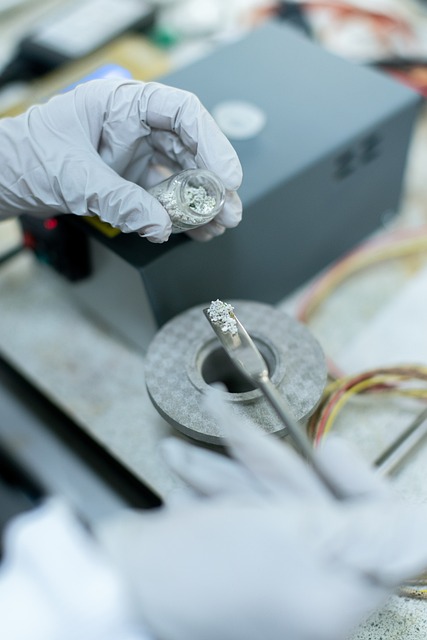
First of all, the choice of storage device is crucial to the stability of organotin T-9. It is recommended to use stainless steel storage tanks or glass containers with good thermal insulation properties, and avoid using plastic containers, because plastics may dissolve slightly at high temperatures and contaminate organotin T-9. At the same time, the storage tank should be equipped with a lid with excellent sealing performance to prevent volatilization and the intrusion of external pollutants. In addition, the interior of the tank should be coated with a corrosion-resistant coating to reduce possible chemical reactions caused by contact with metal surfaces.
Environmental control measures
Environmental regulation is the core link to maintain the catalytic activity of organotin T-9. Under high temperature conditions in summer, the temperature of the storage area can be controlled between 15°C and 25°C by installing air conditioning or refrigeration equipment, which is the optimal storage temperature range for organotin T-9. If conditions permit, constant-temperature cold storage can be used for centralized storage to ensure temperature stability. In addition, humidity control cannot be ignored. It is recommended to install a dehumidifier or place a desiccant (such as silica gel) in the storage area to maintain the relative humidity below 50% to avoid hydrolysis reactions caused by excessive humidity. At the same time, the storage area should be kept away from direct sunlight as much as possible, and blackout curtains or blinds should be used to reduce the impact of light on organotin T-9.
Daily management practices
In terms of daily management, a strict inspection system needs to be established to regularly monitor the temperature, humidity and container sealing of the storage environment. For example, record the temperature and humidity data of the storage area at least once a week, and adjust the operating parameters of the refrigeration or dehumidification equipment in a timely manner. For long-term storage of organotin T-9, it is recommended to conduct sampling testing every three months to evaluate whether its catalytic activity has changed. In addition, operators should wear protective gloves and masks when handling organotin T-9 to avoid direct skin contact or inhalation of volatile gases. After each use, the container should be sealed in time to prevent air from entering and causing unnecessary chemical reactions.
Through the above measures, the decomposition and deactivation of organotin T-9 can be effectively delayed in high temperature environments in summer, ensuring that it can continue to exert efficient catalytic performance in industrial applications.
Data comparison: Performance changes of organotin T-9 under different storage conditions
In order to more intuitively demonstrate the impact of different storage conditions on the catalytic activity of organotin T-9, the following table lists the performance test results after 30 days of storage under various temperature, humidity and light combinations. Test indicators include catalytic activity retention rate (based on initial activity) and decomposition product content (expressed as mass percentage). All experiments were performed under laboratory standard conditions, with a sample volume of 100 ml and an initial purity of 99.5%.
| Storage conditions | Temperature (°C) | Humidity (%) | Lighting conditions | Catalytic activity retention rate (%) | Decomposition product content (%) |
|---|---|---|---|---|---|
| Condition A | 25 | 50 | Avoid light | 98.2 | 0.1 |
| Condition B | 35 | 50 | Avoid light | 85.6 | 0.8 |
| Condition C | 25 | 70 | Avoid light | 92.4 | 0.3 |
| Condition D | 35 | 70 | Avoid light | 78.9 | 1.5 |
| Condition E | 25 | 50 | Strong light (fluorescent lamp) | 90.1 | 0.5 |
| Condition F | 35 | 50 | Strong light (fluorescent lamp) | 72.3 | 2.1 |
| Condition G | 40 | 80 | Strong light (fluorescent lamp) | 58.7 | 3.6 |
As can be seen from the table, the combined effects of temperature, humidity and light have a significant impact on the performance of organotin T-9. Under condition A (25°C, 50% humidity, protected from light), the catalytic activity retention rate was as high as 98.2%, and the decomposition product content was only 0.1%, indicating that these are ideal storage conditions. In contrast, the performance under condition G (40°C, 80% humidity, strong light) was poor, with the catalytic activity retention rate dropping to 58.7% and the decomposition product content soaring to 3.6%. This shows that the superposition effect of high temperature, high humidity and strong light greatly accelerates the decomposition process of organotin T-9.
In addition, comparisons of individual variables can also reveal the specific extent of the impact. For example, compared with condition A, when the temperature only increased from 25°C to 35°C, the catalytic activity retention rate decreased by 12.6 percentage points and the decomposition product content increased by 0.7%. Similarly, compared with condition E, condition A only changed the lighting condition from dark to strong light, the catalytic activity retention rate decreased by 8.1 percentage points, and the decomposition product content increased by 0.4%. These data clearly show that temperature and light are the main factors affecting the performance of organotin T-9, while the impact of humidity is relatively small but cannot be ignored.
Through the comparative analysis of the above experimental data, it can be concluded that in high temperature environments in summer, if you want to maintain the catalytic activity of organotin T-9 to the greatest extent, you must strictly control the storage conditions, giving priority to low temperature, low humidity and light-proof environments. This conclusion provides clear guidance for practical operations.
Summary and outlook: Storage and development of organotin T-9Catalytic activity maintained
Through a comprehensive analysis of the basic properties, storage condition requirements and performance changes of organotin T-9 in high temperature environments in summer, we can draw a clear conclusion: a scientific and reasonable storage scheme is the key to ensuring its catalytic activity. Whether from the perspective of temperature, humidity or light, any neglect of storage conditions may lead to the decomposition, volatilization or side reactions of organotin T-9, thereby significantly weakening its industrial application value. Therefore, in actual operations, the storage principles of low temperature, low humidity and light avoidance must be strictly implemented, supplemented by appropriate equipment and technical means, such as constant temperature cold storage, dehumidification equipment and sealed containers, to delay its performance degradation to the greatest extent.
Looking to the future, with the continuous development of the chemical industry, the application scope of organotin T-9 will be further expanded, and its storage and activity retention technology will also face higher requirements. On the one hand, the research and development of new storage materials will become a research hotspot, such as the development of special containers with stronger thermal insulation, moisture-proof and light-resistant properties to adapt to more complex environmental conditions. On the other hand, the introduction of intelligent storage systems may also become a trend. Through real-time monitoring of temperature and humidity and automatic adjustment of environmental parameters, precise management of the storage process of organotin T-9 can be achieved. In addition, exploring the possibility of adding stabilizers or improving the molecular structure to maintain catalytic activity in high-temperature environments is also a direction worthy of in-depth research. In short, only by continuously optimizing storage technology and improving management levels can we better meet industrial needs and promote the widespread application of organotin T-9 in more fields.
====================Contact information=====================
Contact: Manager Wu
Mobile phone number: 18301903156 (same number as WeChat)
Contact number: 021-51691811
Company address: No. 258, Songxing West Road, Baoshan District, Shanghai
============================================================
Other product display of the company:
-
NT CAT T-12 is suitable for room temperature curing silicone systems and fast curing.
-
NT CAT UL1 is suitable for silicone systems and silane-modified polymer systems, with medium catalytic activity and slightly lower activity than T-12.
-
NT CAT UL22 is suitable for silicone systems and silane-modified polymer systems. It has higher activity than T-12 and excellent hydrolysis resistance.
-
NT CAT UL28 is suitable for silicone systemsAnd silane-modified polymer system, this series of catalysts has high activity and is often used to replace T-12.
-
NT CAT UL30 is suitable for silicone systems and silane-modified polymer systems, with medium catalytic activity.
-
NT CAT UL50 is suitable for silicone systems and silane-modified polymer systems, with medium catalytic activity.
-
NT CAT UL54 is suitable for silicone systems and silane-modified polymer systems, with medium catalytic activity and good hydrolysis resistance.
-
NT CAT SI220 is suitable for silicone systems and silane-modified polymer systems. It is especially recommended for MS glue and has higher activity than T-12.
-
NT CAT MB20 is suitable for organobismuth catalysts and can be used in organic silicon systems and silane-modified polymer systems. It has low activity and meets the requirements of various environmental protection regulations.
-
NT CAT DBU is suitable for organic amine catalysts and can be used for room temperature vulcanization silicone rubber to meet various environmental protection regulations.